SERVICES
Six disciplines on the flux stream
RoboFlux is a robotics consultancy and systems-integration studio at our Toronto office on Niagara Street. We scope feasibility, engineer perception and control systems, and commission automation cells for mid-market manufacturing and warehousing clients across Ontario. Project budgets are quoted in CAD; scoped engagements typically run C$85,000–C$450,000, with retainer arrangements from C$12,000–C$28,000 per month for ongoing tuning and support.
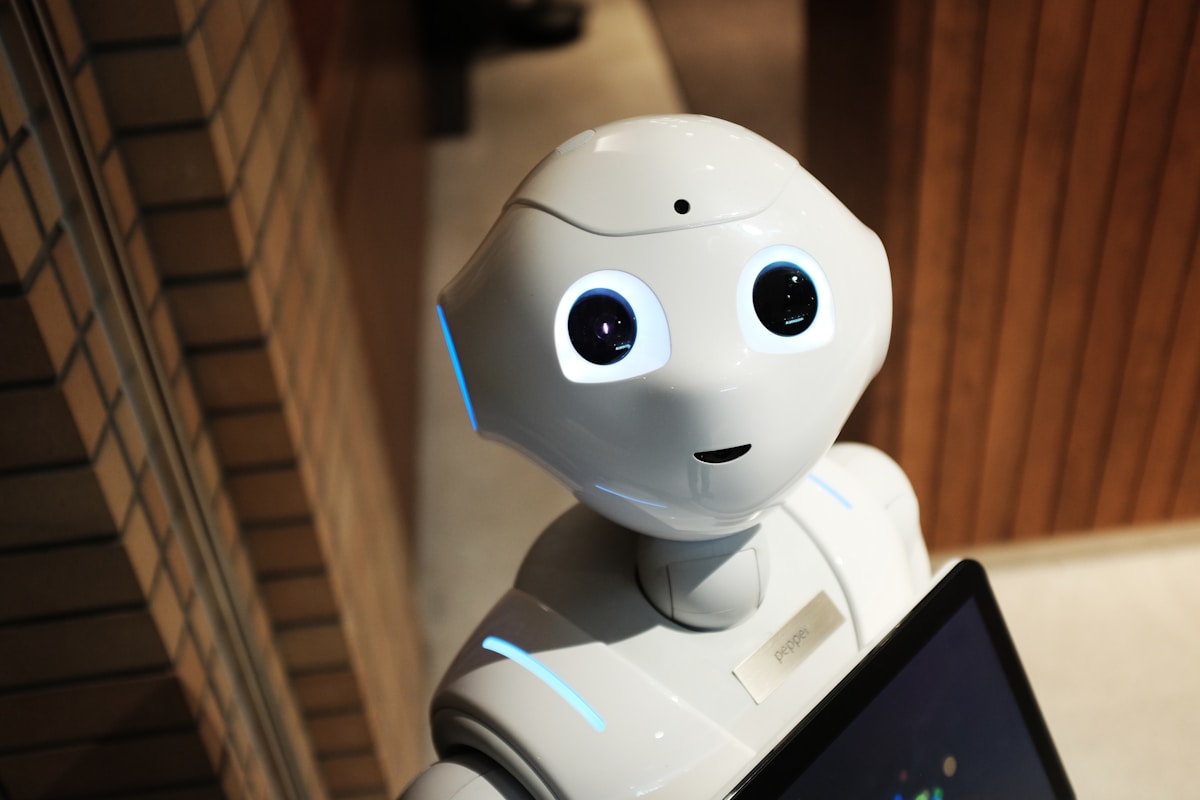
Vision setup — calibrated against real parts, not demo lighting
HOW WE ENGAGE
Engineering services, not shelf products
Every engagement begins with a feasibility review: what the line must sense, how motion planning constraints interact with upstream buffers, and which PLC or ROS bridges already exist on your floor. We do not sell robots off a catalogue or promise guaranteed throughput gains. Our engineers work human-in-the-loop with your operations team from kickoff through validation.
Whether you need a single cobot cell or a warehouse AMR fleet wired into your WMS, we bring the same structured approach — sense, plan, integrate, validate — with functional safety and CSA-informed review at every stage.
01 — PERCEPTION
Robot Perception & Computer Vision
Industrial parts look different under fluorescent shift lighting than they do in a vendor demo. Our robot perception practice starts on your floor or in our Niagara Street lab with camera calibration, lens selection, and lighting trials against the actual SKU mix. We build computer vision pipelines for defect detection, pick-point estimation, bin picking, and dimensional verification — always with sensor fusion where LiDAR, depth cameras, or force-torque data improve reliability.
Edge AI models assist classification but never replace human validation gates. We document failure modes, confidence thresholds, and retraining triggers so your engineers know when perception drifts. For warehousing applications, vision-guided sortation and barcode-free identification are scoped against real conveyor speeds and occlusion patterns. Every perception deployment includes structured test campaigns under production-adjacent conditions before sign-off.
02 — MOTION
Motion Planning & Control
Trajectory generation, collision avoidance, and real-time control systems tuning for robotic arms, cobots, and mobile platforms. We simulate manipulation sequences in digital twin environments before touching your production schedule, then commission on hardware with your operators present. Motion planning accounts for fixture variability, tool compliance, and the buffer starvation patterns that stall lines during third shift.
For AMR and AGV deployments, we configure SLAM maps, waypoint routing, and dynamic obstacle handling that respects human pick stations and forklift traffic. Control systems integration covers servo tuning, force-controlled assembly, and the handshake between robot controllers and upstream PLC logic. We document every parameter change and provide operator-facing runbooks — not a black-box trajectory file that only our engineers can adjust.
03 — INTEGRATION
Systems Integration — PLC / ROS
New robotics must talk to equipment already on your floor. Our systems integration team bridges ROS nodes, PLC ladder logic, MES event streams, and WMS order feeds into a coherent control architecture. We map I/O points, define handshake protocols, and build monitoring dashboards so your maintenance team can diagnose faults without calling us for every alarm.
Hardware-in-the-loop rigs at our Toronto office run full PLC and ROS stacks against relay boards and simulated sensors before code ships to site. Integration scope includes OPC-UA bridges, MQTT telemetry, and the safety interlocks that keep cobot cells compliant with ISO 10218 and ISO/TS 15066. We work with your existing integrators and OEM partners — we are not here to rip out functioning infrastructure.
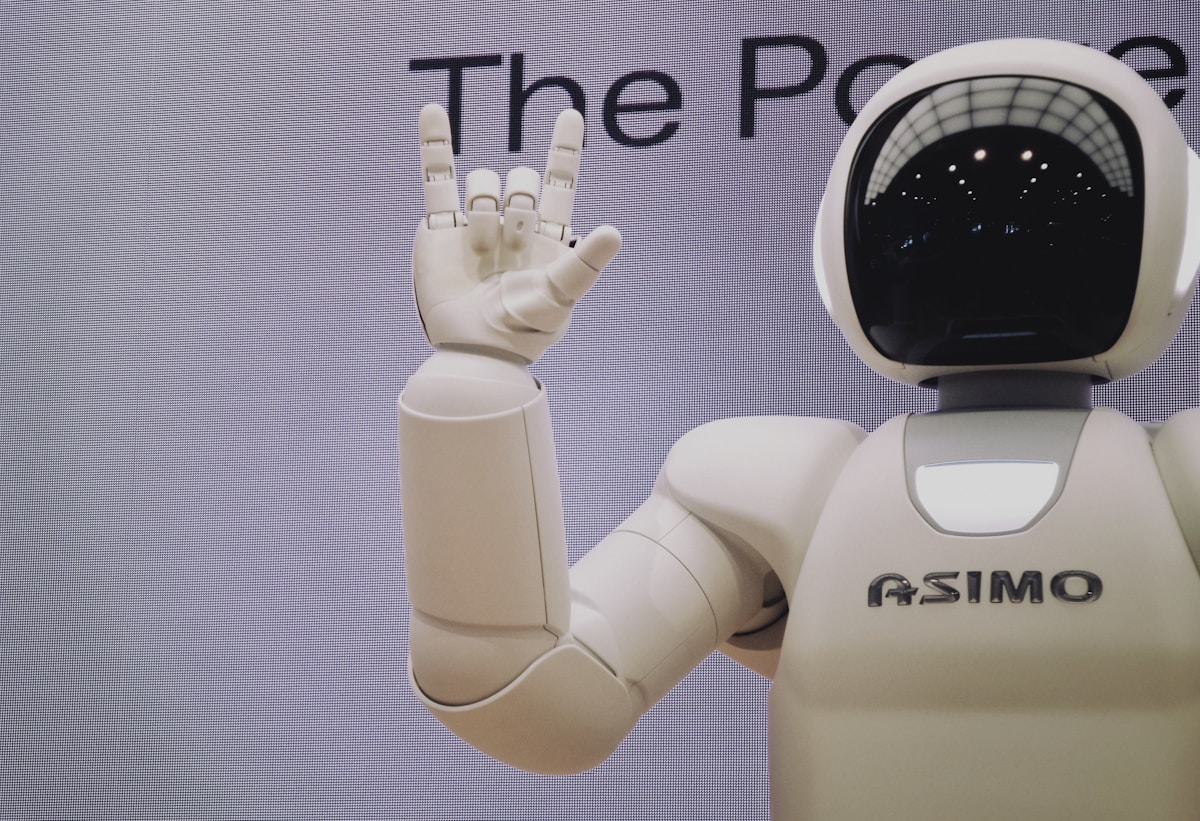
Integration bench — software meets the relay
04 — CELL DESIGN
Automation Cell & Line-Flow Design
Layout, tooling interfaces, safety fencing, and line-flow design for new or retrofitted automation cells. We model material flow through buffers, cycle times at each station, and the starvation events that collapse throughput when upstream equipment hiccups. Cell design includes reach studies, floor anchoring, utility routing, and the ergonomic placement of teach pendants and HMI panels for your operators.
Retrofit projects receive the same rigour as greenfield builds: we survey existing conveyors, identify pinch points, and propose cell placements that minimise downtime during installation. Line-flow design documents include buffer sizing rationale, takt-time assumptions, and the changeover sequences your team will run daily. We coordinate with structural and electrical contractors so the robotics scope integrates cleanly with the wider build programme.
05 — THROUGHPUT
Throughput & Process Optimisation
Buffer balancing, cycle-time analysis, and bottleneck relief without over-automating the wrong step. We instrument cells with production data capture, map wait states across shift patterns, and identify whether the constraint is perception latency, motion planning overhead, or an upstream manual station. Optimisation recommendations are prioritised by implementation effort and production risk — not by which technology looks newest in a trade-show booth.
Where AMR fleets serve multiple pick zones, we tune routing algorithms and charging schedules against real order profiles. For fixed automation, we adjust parallelisation, tool-change sequences, and the PLC logic that governs inter-cell handshakes. Results are measured against agreed baselines during validation; we do not publish ROI guarantees or promise specific percentage improvements.
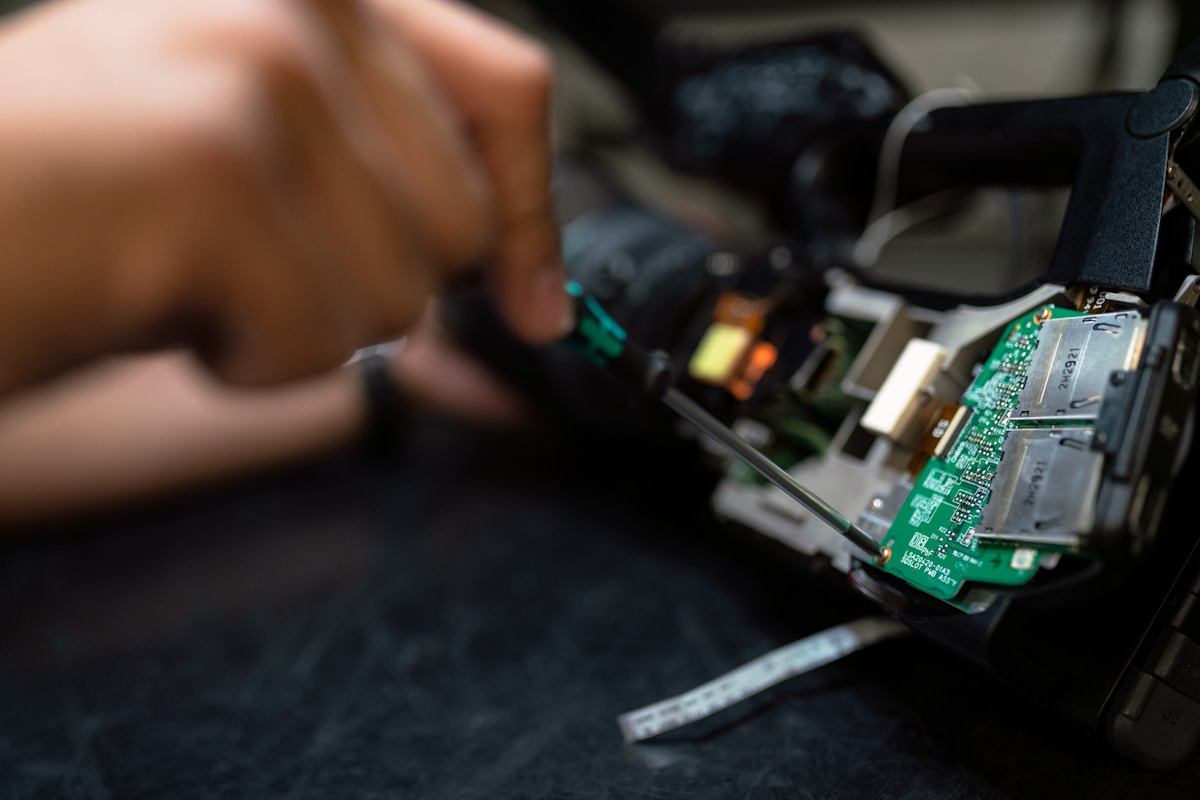
Validation runs — structured test campaigns before hand-off
06 — SAFETY
Safety, Testing & Validation
Functional safety documentation, risk assessment support, and structured test campaigns for every deployment. We align with ISO 10218, ISO/TS 15066, and applicable CSA requirements — providing evidence packages for your internal safety review, not certification advice. Cobot speed-and-separation monitoring, light curtains, and area scanners are configured and tested with your safety officer present.
Validation extends beyond safety interlocks: we run production-representative part mixes, document edge-case failures, and train operators on human-in-the-loop recovery procedures. AI perception models receive adversarial test sets — glare, dust, part orientation drift — before production release. No provider can guarantee zero incidents; workplace safety remains a shared responsibility between RoboFlux and every client.
§4 — Budget & outcome disclaimer. All figures on this page are indicative CAD ranges for scoping conversations, not binding quotes or performance guarantees. Scoped automation-cell projects typically fall between C$85,000 and C$450,000 depending on perception complexity, integration scope, and site constraints. Retainer arrangements for ongoing tuning and engineering support run C$12,000–C$28,000 per month. Timelines, throughput outcomes, and return on investment depend on your existing equipment, operator practices, and production variability — we do not guarantee specific ROI, cycle-time reductions, or a hands-off, zero-incident operation. RoboFlux provides professional engineering services only; we are not a robot distributor, financial advisor, or certification body. Contact [email protected] for a scoped proposal. Last updated 14 July 2026.
Ready to scope a service engagement?
Tell us which discipline matches your bottleneck — perception drift, buffer starvation, or an integration gap between PLC and ROS.
Scope an integration project